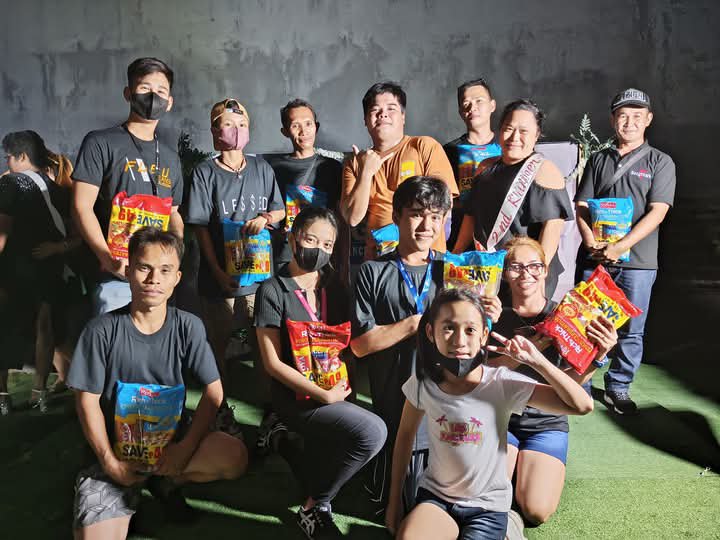
Before this note becomes a story about versions, models, and interfaces, it has to begin with a memory. In 2022, while the pandemic was still shaping everyday life, I was working as a sales marketing agent at GNP1 Inc., Globe Broadband Telecom, while taking modular classes in senior high school.
I was young, busy, and learning in two directions at once. At work, I learned how to speak with people, listen carefully, stay patient, and keep showing up even when the day was difficult. At school, I was learning independently through modules. Between April and June 2022, I earned more than PHP 45,000. It was not only income to me; it was proof that effort could create a path forward even when life felt uncertain.
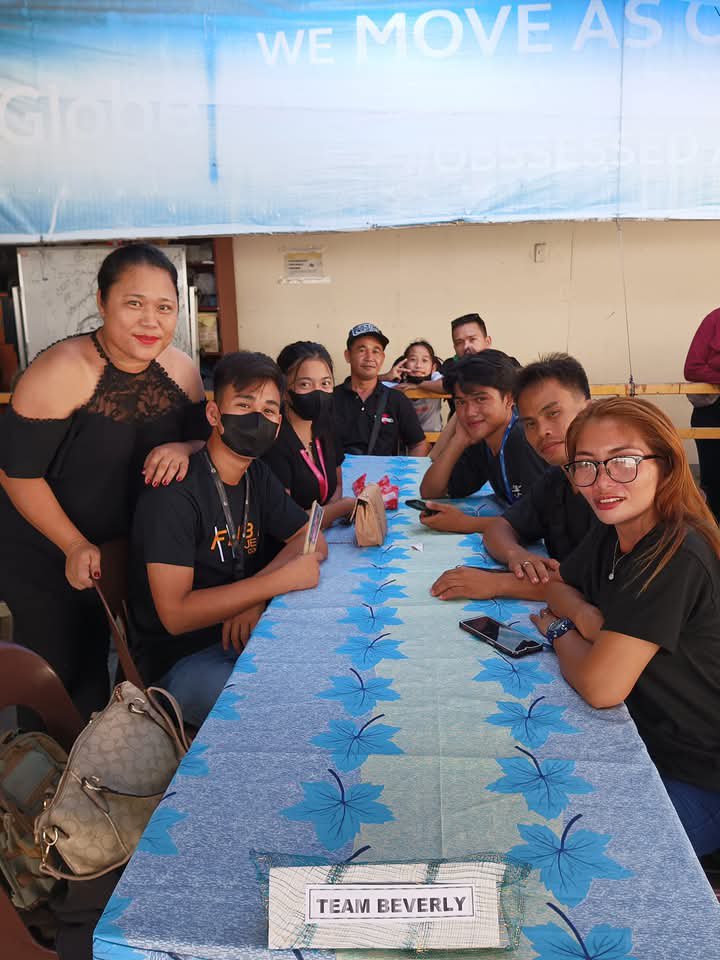
That season gave me one of the warmest memories I carry. It was the last Christmas that felt completely happy to me—the kind of day where friends, family, and my first love were all part of the same world. Looking at these photos, I remember how bright we were. We were tired, but we were together. We were still making plans. We did not know how much the memory would come to mean later.
I loved that job because it was more than a job. It gave me people, confidence, and a reason to believe I could build something of my own. Years later, when I describe V3 as simple, professional, and organized, I am not only talking about visual design. I am talking about lessons learned from that earlier life: clarity matters, people matter, and the best work should still leave room for warmth.
After that season, something in me became quiet. Unexpected events left my heart feeling empty, and the energy I once brought to work and learning became difficult to find. I was still moving, but I no longer felt as dedicated or as happy as I had been in those photographs.
In 2024, I joined CHME Inc., a PLDT telecom team, after the agency I had worked with went bankrupt. We held a Christmas party, and for a little while I let myself enjoy being surrounded by people again. My mother was our team leader, so the night carried a kind of comfort I did not know I was about to lose. I drank until I fell asleep, holding on to the celebration as if it were an ordinary night.
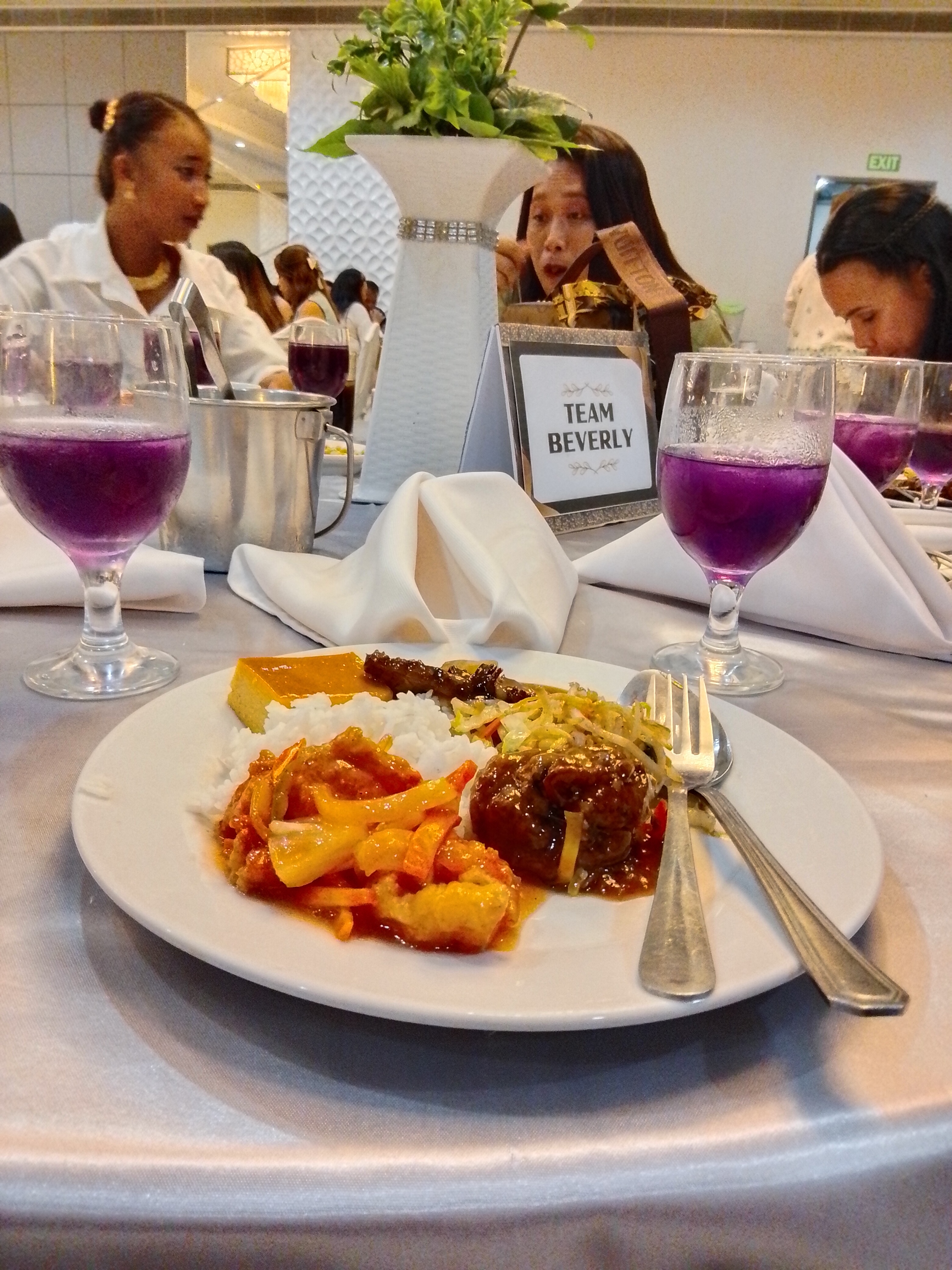
When I woke up, the world felt different. The memory stayed bright, but everything around it had changed. Grief can make an ordinary photograph feel like a doorway: you look at the people, the food, the table, and realize you are seeing a moment that cannot happen again in exactly the same way.
That loss did not immediately give me a direction. It took time before I could turn the emptiness into motion. Eventually, I decided to build a portfolio—not because I had everything figured out, but because I needed a better job, a new beginning, and one place where I could gather the parts of myself that still wanted to create.
The first version was imperfect, but it gave my experience somewhere to go. That is one lesson I hope readers carry from this story: you do not need to feel ready before you begin rebuilding. Sometimes the first small project is not a finished answer. Sometimes it is simply proof that you are still here.
A portfolio rarely begins as a finished statement. Mine began as an unfinished question: what would happen if I tried to build my own place on the internet?
In 2024, I did not have a clear design system, a carefully planned content strategy, or a perfect list of clickable links. I had a vague idea, a growing interest in AI, and the confidence to make something even though I was still learning what “something” should be.
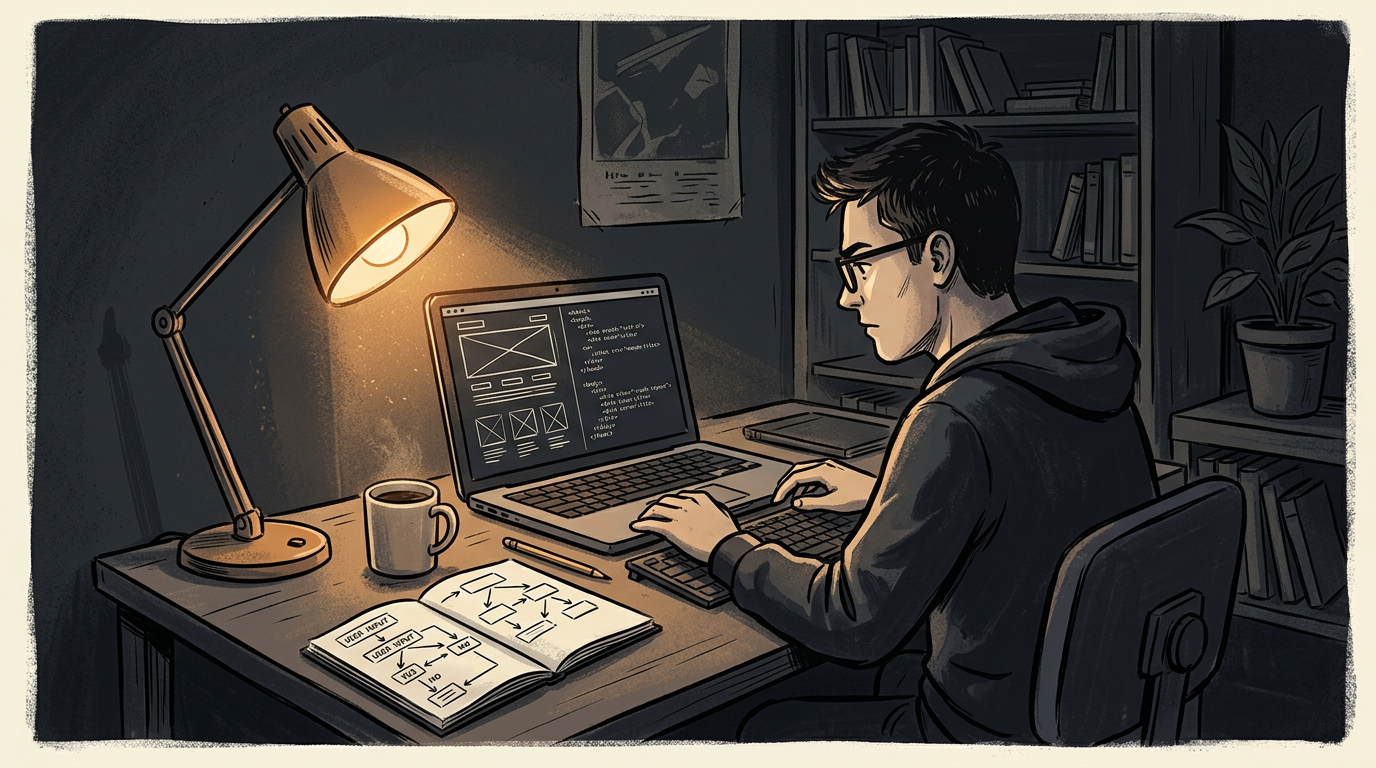
V1: building before I knew the shape
The first version of my portfolio was overdesigned in the way beginner projects often are. I wanted every part to communicate that I could build: visual effects, sections, an assistant, project ideas, and anything else I was excited to try.
There were no polished contact flows yet. No Gmail integration. Few clickable links beyond Facebook and my contact number. The assistant was rule-based, which meant its knowledge came from conditions I had written myself. It could respond to familiar inputs, but it could not yet understand the wider shape of a conversation.
Still, V1 mattered. It gave my work a home, and it gave me a place to test ideas in public. The roughness was useful because it showed me what I had not learned yet: how to organize information, how to make a visitor feel guided, and how to let the work speak without covering it in decoration.
The portfolio became a laboratory
After V1, I stopped seeing the portfolio as a static resume. It became a laboratory. Every project gave me another reason to improve the system around it. If I learned something about interfaces, I could apply it to the portfolio. If I built an assistant, the portfolio could become its first home. If I made a better project, the site could explain not only what it was, but why it mattered.
That shift changed the question from “How do I make this look impressive?” to “How do I make this useful, understandable, and honest?”
V2: the assistant learned to reach further
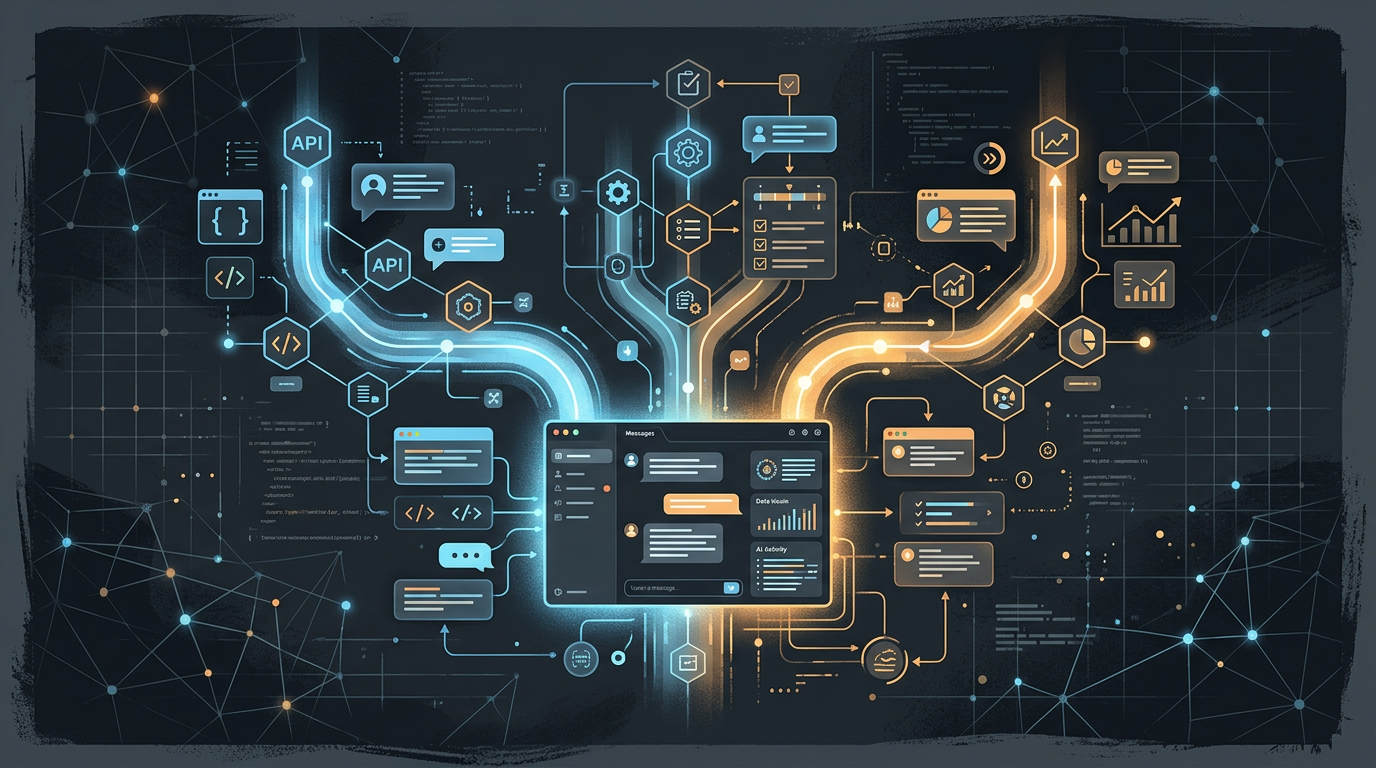
In 2025, the second version became more interesting. The assistant no longer depended only on the rules I had written. I upgraded its knowledge through APIs and began thinking about the portfolio as a multi-model system.
Alex Lite used the Gemini API as a primary model. Alex Mini used Grok for another style of speed and response. Alex Nano was my own upgraded rule-based model, built around nodes and chunks so it could interpret input, connect related pieces of knowledge, and return responses that felt merged rather than isolated.
The three models were not just three names on a page. They represented three ways of thinking about intelligence: reaching an external model, selecting the right capability, and building a controlled system myself. The architecture made the portfolio feel less like a brochure and more like a living demonstration.

Understanding the model boundary
Adding APIs also taught me that intelligence is only one part of the experience. The portfolio needed to communicate when a model was thinking, what it could answer, and what happened when a request failed. A visitor should not have to guess whether the assistant is loading, unavailable, or simply misunderstood the question.
const models = {
  lite: { provider: "gemini", role: "primary" },
  mini: { provider: "grok", role: "fast-fallback" },
  nano: { provider: "local-rules", role: "offline" }
}

const selected = chooseModel(input, models)
The important lesson is not the exact code. It is the boundary around it. A model should have a clear role, a predictable fallback, and a response the interface can explain. Even a personal portfolio deserves those decisions because every visitor is trusting the system with their attention.
V3: the portfolio became a story about growth
This current version is V3. It is not only a visual refresh. It is an attempt to make the story easier to follow. The projects have context. The notes explain the lessons behind the work. The assistant is part of the experience, but it does not have to compete with the person who built it.
V3 also carries the reality of everything that came before. The beginner who made a loud first version is still here. The builder who learned APIs, model behavior, and interface states is still learning. The difference is that I now understand the portfolio as a system with responsibilities: it should load clearly, guide people to real work, make contact possible, and remain honest about what is experimental.
What a portfolio can teach its builder
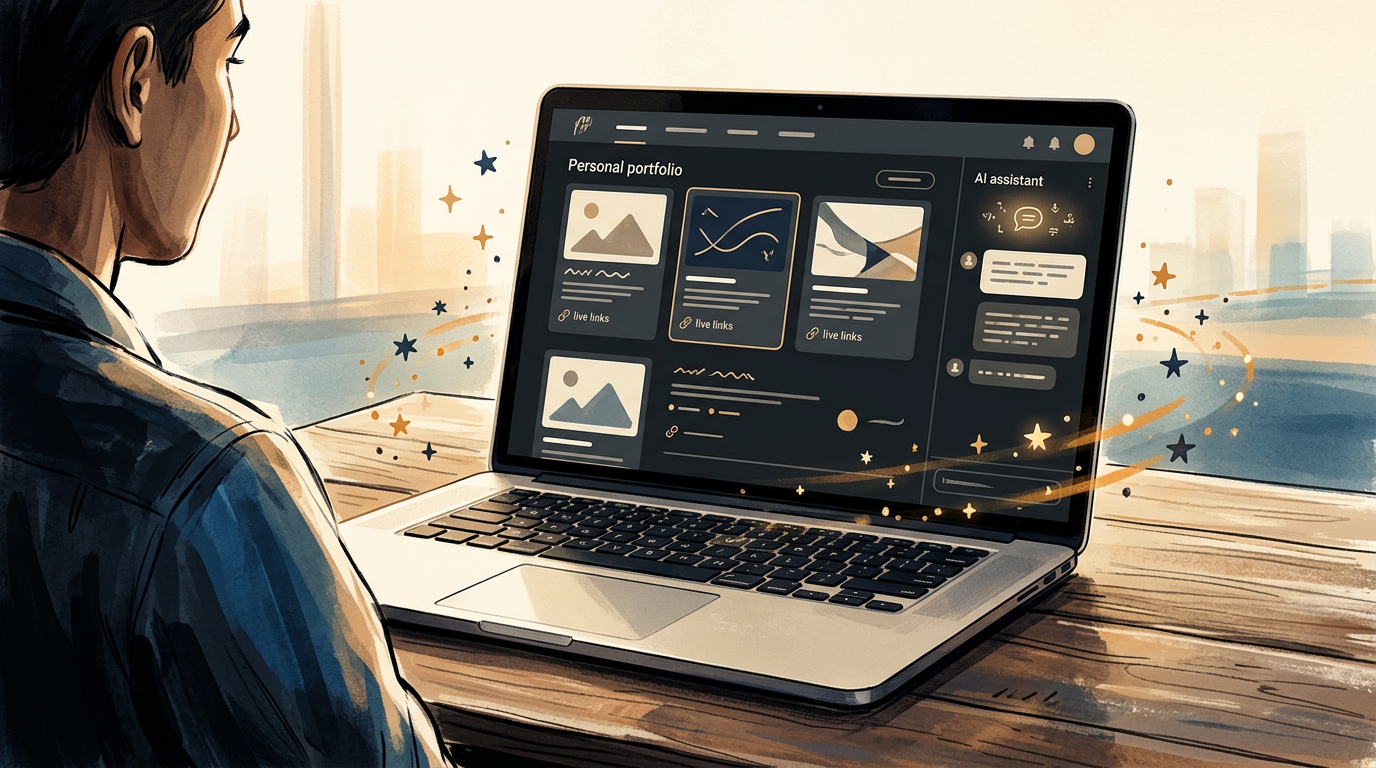
A portfolio teaches you to edit yourself. It asks which projects still represent your direction, which details help a visitor understand you, and which experiments belong in the story even if they are not perfect.
It also teaches consistency. A single page can be beautiful, but a portfolio has to connect pages, projects, notes, links, and contact details into one understandable path. That work is not as flashy as adding another effect, but it is what turns a collection of pages into an experience.
Most importantly, the portfolio taught me that progress does not have to erase the earlier versions. V1 is not embarrassing evidence that I was a beginner. It is the first proof that I was willing to build. V2 is not only a feature upgrade. It is evidence that curiosity can become architecture. V3 is a chance to make that architecture clearer for someone else.
A practical way to build your own
If you are making a portfolio, start with one honest question: what do you want a visitor to understand about you after five minutes? Choose a small number of projects, explain the problem and your contribution, and make the next action obvious.
- Give every featured project a clear outcome and a working link when possible.
- Use an assistant only when it helps visitors find or understand the work.
- Keep model roles explicit and provide a fallback when an API is unavailable.
- Make contact easy with a real email address, not only a social profile.
- Let the visual system support the story instead of becoming the story.
- Keep a changelog or notes section so growth is visible over time.
Revamping a portfolio is not just a design exercise. It is a way to ask what kind of builder you are becoming. Mine started vague, became experimental, and is now trying to become more useful. The versions are different, but they are connected by the same decision: to keep learning in public and keep making the next version with more care.
V3 is not the end. It is simply the first version that can look back clearly enough to say: this is where I began, this is what I learned, and this is what I am ready to build next.